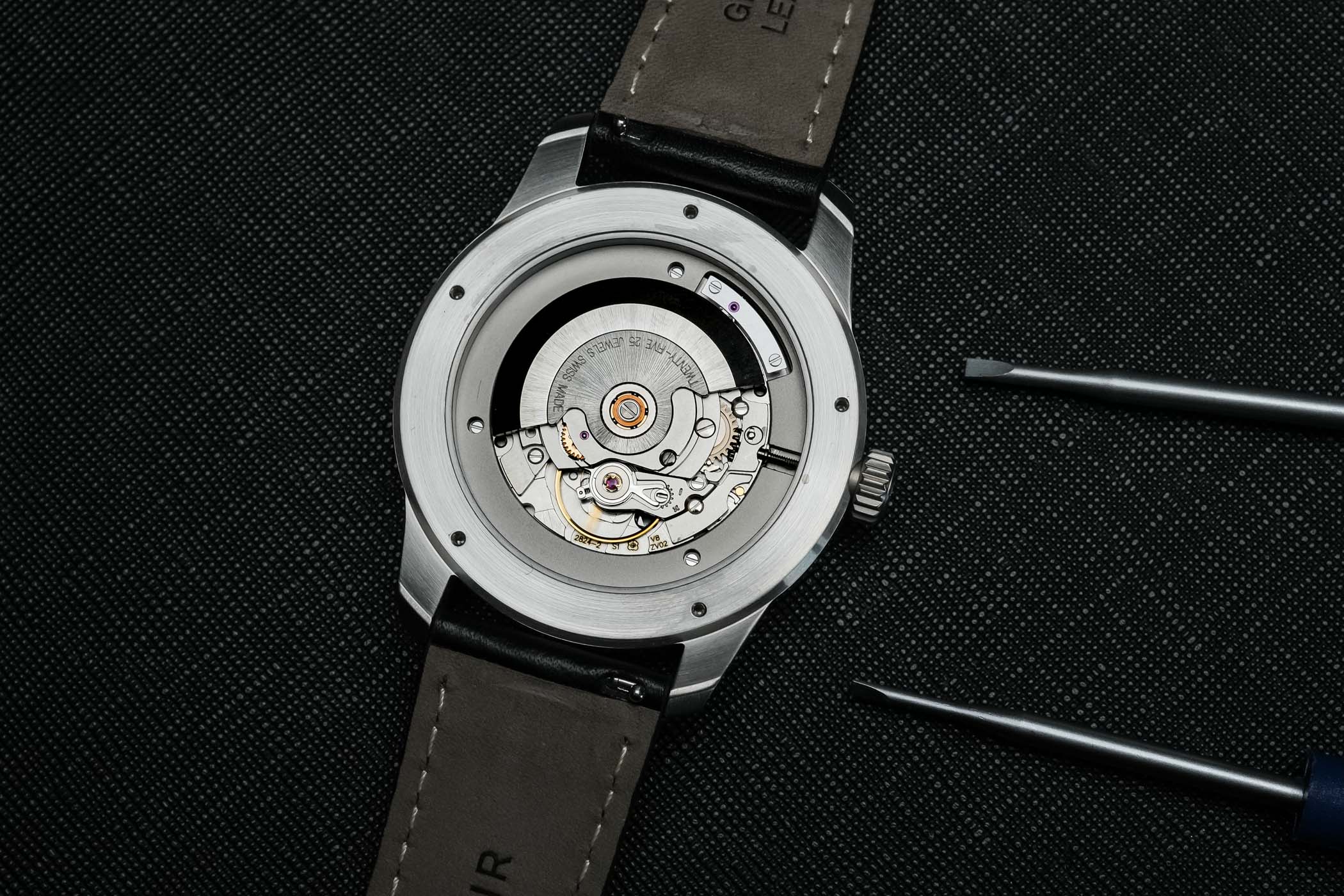
A mechanical watch movement is a precision micro-machine with hundreds of components running at thousands of impacts per second; the components require microscopic films of lubricant at the bearings and pivots to operate. Watch oils are formulated for extreme thin-film viscosity and chemical stability; the standard reference is Moebius synthetic oils (Moebius 9010 for fast pivots, 9020 / 9415 for slower bearings, D5 for mainspring barrel). Even the best modern lubricants degrade over years: thermal cycling, light exposure, dust contamination, and chemical interactions cause oils to thicken, dry out, or migrate from where they should be.
The standard service interval for volume Swiss automatic movements (ETA 2824, Sellita SW200, mid-tier brands) has historically been 4-5 years. After this interval lubricant degradation typically becomes measurable on a timegrapher: rate spreads across positions, beat error increases, and amplitude drops below the manufacturer minimum (~250-280 degrees). Continued operation past the recommended interval accelerates wear: dry pivots score the jewels, gear teeth wear unevenly, and components that were previously serviceable need replacement. Rolex and Patek Philippe modern movements use better lubricants and harder pivot jewels; both brands now publish 10-year recommended intervals.
"You can run a Patek Philippe for ten years without service. After that you cannot, because the dry oil starts to do permanent damage. The cost of late service is far more than the cost of timely service."- Watchmaker on service-interval economics
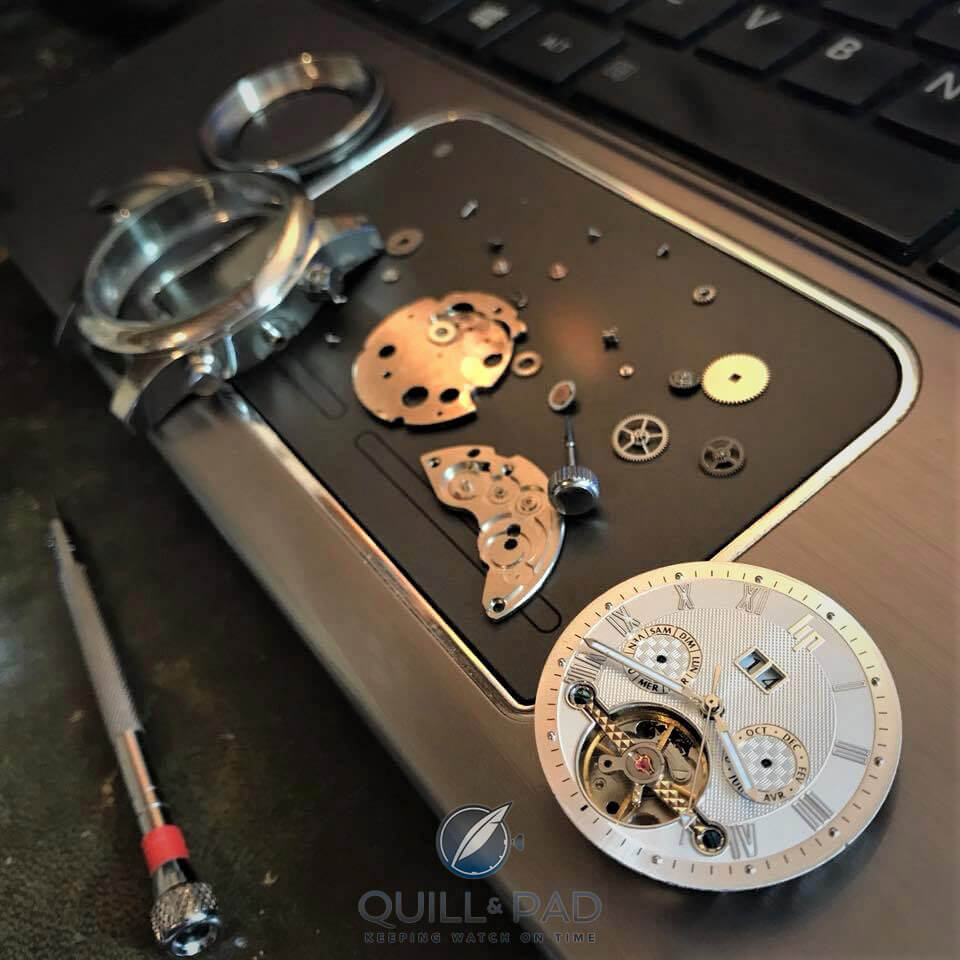
A full mechanical watch service consists of: (1) full disassembly of the movement into its component parts; (2) ultrasonic cleaning of all parts in dedicated cleaning fluids (one bath for steel, one for brass, one for solvent rinse); (3) component inspection and replacement of any worn or damaged parts (mainspring, balance staff, gaskets); (4) re-oiling of every pivot and bearing with the correct lubricant for that location; (5) reassembly in the correct sequence; (6) regulation on the timegrapher in multiple positions; (7) case and bracelet refurbishment (light polishing, gasket replacement, water-resistance test); (8) final accuracy test over 24-48 hours.
The service cost at a brand factory ranges from CHF 400-600 for a basic three-hand automatic (Tudor, Tissot, Hamilton service centre), CHF 800-1,500 for premium-tier (Rolex Service Centre, Omega service), to CHF 2,500-8,000+ for haute horlogerie (Patek service, AP Manufacture service, Lange service). Independent watchmakers offer the same work at 30-60% lower cost but with quality variation depending on watchmaker reputation; complex movements (perpetual calendar, minute repeater) typically require brand factory service for parts access. The cost-vs-watch-value ratio is significant for entry-tier mechanicals; a Hamilton Khaki at CHF 700 retail with a CHF 400 service cost makes the maintenance economics marginal.
Symptoms of an overdue service include: (1) gaining or losing more than 30 sec/day consistent across positions (rate drift); (2) running but not auto-winding well (rotor wear or main spring fatigue); (3) condensation under the crystal (gasket failure, water resistance compromised); (4) rotor noise on wrist (rotor bearing failure); (5) chronograph pushers feeling loose or sticky (cam or column wheel wear); (6) erratic running (escapement contamination). Any of these symptoms warrants professional inspection regardless of nominal service interval.
For buyers and owners, the practical guide: follow the brand recommendation for your specific watch (printed in the manual or available on the brand website); budget for the cost as part of watch ownership (CHF 1,500-3,000 over 10 years for a CHF 5,000-10,000 watch is typical); note the service date (a service certificate or factory log is added to the watch's provenance and increases resale value); and do not run a watch indefinitely without service (long-term oil-dry-out causes irreversible component damage that may exceed the cost of a complete movement replacement).


Comments 2